dating app burnout Archives - The Crush Confidential

Is a Matchmaker Worth It? An Honest Look at the Math

Is a matchmaker worth it? For some people, yes. For others, no.

That is the honest answer, and it depends on four things: how much your time is worth, how ready you actually are, whether you can take feedback, and what you are comparing the cost to. Below is the math, along with a straight description of who should not hire one.

A happy couple matched by a matchmaker.

The Short Answer

A matchmaker is worth it when you are genuinely ready for commitment, your time carries real financial value, you have already tried apps without success, and you are willing to adjust your approach based on feedback.

A matchmaker is not worth it when you want a guarantee, expect to stay passive, are unwilling to change anything, or are not actually ready for a relationship yet.

Price is rarely the deciding factor. Readiness is.

The Cost Comparison Everyone Gets Wrong

Most people compare a matchmaking fee to a dating app subscription. A premium app runs $10 to $60 per month, while professional matchmaking typically costs between $5,000 and $25,000, with elite firms starting near $25,000.

Set side by side, the app wins easily. However, that comparison measures the wrong thing.

Apps sell access. You still do the searching, screening, messaging, and scheduling yourself. Meanwhile, matchmaking sells labor. Someone else does that work, and someone else absorbs the failed conversations.

So the real comparison is not fee versus fee. Instead, it is total cost per outcome, and time belongs in that calculation.

Running the Time Math

Suppose you spend four hours a week on dating apps. That covers swiping, messaging, scheduling, and the dates that go nowhere.

Over three years, that adds up to roughly 624 hours.

Now attach a number to your time. If an hour of your work is worth $100, then three years of app dating already cost you $62,400 in time alone. At $200 per hour, the figure doubles.

Neither total includes the emotional cost, and that cost is well documented. A Forbes Health survey of 1,000 app users found that 78% feel emotionally, mentally, or physically exhausted by the apps at least sometimes. Pew Research found that roughly 88% of men and 90% of women who used apps in the past year often or sometimes felt disappointed by the people they met.

Against those numbers, a five-figure fee starts to look like a different kind of decision.

Who Matchmaking Actually Works For

Be honest with yourself about these.

You are genuinely ready. Not curious, not lonely, not recovering from something six weeks old. Ready.

Your time carries real value. Executives, founders, physicians, and attorneys tend to see the return fastest, because their hours are expensive and their schedules are full.

You have already tried the alternatives. Apps did not work, your friends have run out of people to introduce you to, and your own network is tapped.

You can take feedback. This one matters more than any other. Matchmaking gives you honest information about how you come across, and that information only helps if you are willing to hear it.

You are open to slight surprises. Rigid checklists shrink the pool to nothing. The best matches often sit two degrees off your stated type.

Who Should Not Hire a Matchmaker

This section will cost us some clients, and it belongs here anyway.

You want a guarantee. No ethical firm promises a relationship. Anyone who does is selling you something other than matchmaking.

You plan to stay passive. Paying a fee does not outsource showing up. You still attend the dates, do the coaching, and communicate honestly.

You refuse to adjust anything. If your approach has not worked for a decade and you intend to keep it identical, then a matchmaker changes only who sits across the table.

You are not over your last relationship. Timing beats strategy. Come back later.

The fee would strain you financially. Five figures should be uncomfortable, not destabilizing. If it would be, then a coaching membership or a free profile submission serves you better right now.

A couple on a curated date.

What About Success Rates?

You will see impressive figures on matchmaking websites. Some firms claim 80% success rates against roughly 12% for apps.

Treat those numbers carefully. They are self-reported marketing claims with no published methodology, no independent auditing, and no shared definition of what counts as success. We do not use them, and neither should you when evaluating any firm.

Here is what can be verified instead. Pew found that only about one in ten partnered adults met their current partner through a dating site or app. Match Group, which owns Tinder, Hinge, and Match, reported paying users down 6% year over year in the second quarter of 2026, while revenue per payer rose 6%. Fewer people are paying, and those who stay pay more.

Ask any firm you evaluate how they define success and how they track it. Vague answers tell you something.

The Part Most Firms Skip

Cost conversations usually stop at introductions. That framing hides the real gap.

Nearly every matchmaking service, at every price point, hands you an introduction and steps back. Yet the first few weeks of a connection are its most fragile stage, and that is exactly when clients get left alone.

Our proprietary 3-Date Method addresses that directly. First dates measure nerves, while second and third dates measure compatibility. Because we stay involved through that window and collect feedback from both people separately, connections that would normally die of one misread text get a real chance instead.

When you evaluate whether a matchmaker is worth the fee, ask what happens after the introduction. That answer changes the value considerably.

Frequently Asked Questions

How much does a matchmaker cost? Professional matchmaking in 2026 ranges from about $1,000 for basic database services to more than $500,000 for ultra-exclusive international searches. Most reputable firms charge between $5,000 and $25,000, while elite national firms start near $25,000. Our matchmaking packages start at $25,000.

Do matchmakers guarantee you will find someone? No ethical matchmaker guarantees a relationship. Firms guarantee a process, a number of introductions, or a contract term. Treat any promise of an outcome as a warning sign.

Is a matchmaker better than a dating app? It depends on your goal. Apps deliver volume and low cost. Matchmaking delivers screening, vetting, and personal support at a much higher price. For people short on time and serious about commitment, matchmaking usually produces better results per hour invested.

How long does matchmaking take? Most contracts run three to twelve months. Timelines vary based on how specific your criteria are and how wide the search area is.

Can I afford a matchmaker on an average income? Often not, and that is fine. Coaching memberships and free profile submissions exist for exactly this reason. Our Elevated Circle membership costs $897, or $597 once for lifetime access.

What happens if I do not like the matches? Reputable firms collect feedback after every introduction and adjust the search. We gather that feedback from both people separately, so nobody has to deliver an uncomfortable verdict face to face.

Where to Start

We work with commitment-minded singles nationwide who want structure rather than more swiping.

Apply for matchmaking: Two Ways to Work With Us

Want visibility without a package? Join The Elevated Circle.

Not ready to invest? Add your profile to the Singles Rolodex at no cost.

See the outcomes: Our Success


Are Matchmakers Making a Comeback? The 2026 Data

Are matchmakers making a comeback? The short answer is yes, and the numbers behind it are more specific than most people expect.

Two things are happening at once. Dating apps are losing paying users, while professional matchmaking keeps growing. Below is what the 2026 data actually says, along with what it means if you are still swiping.

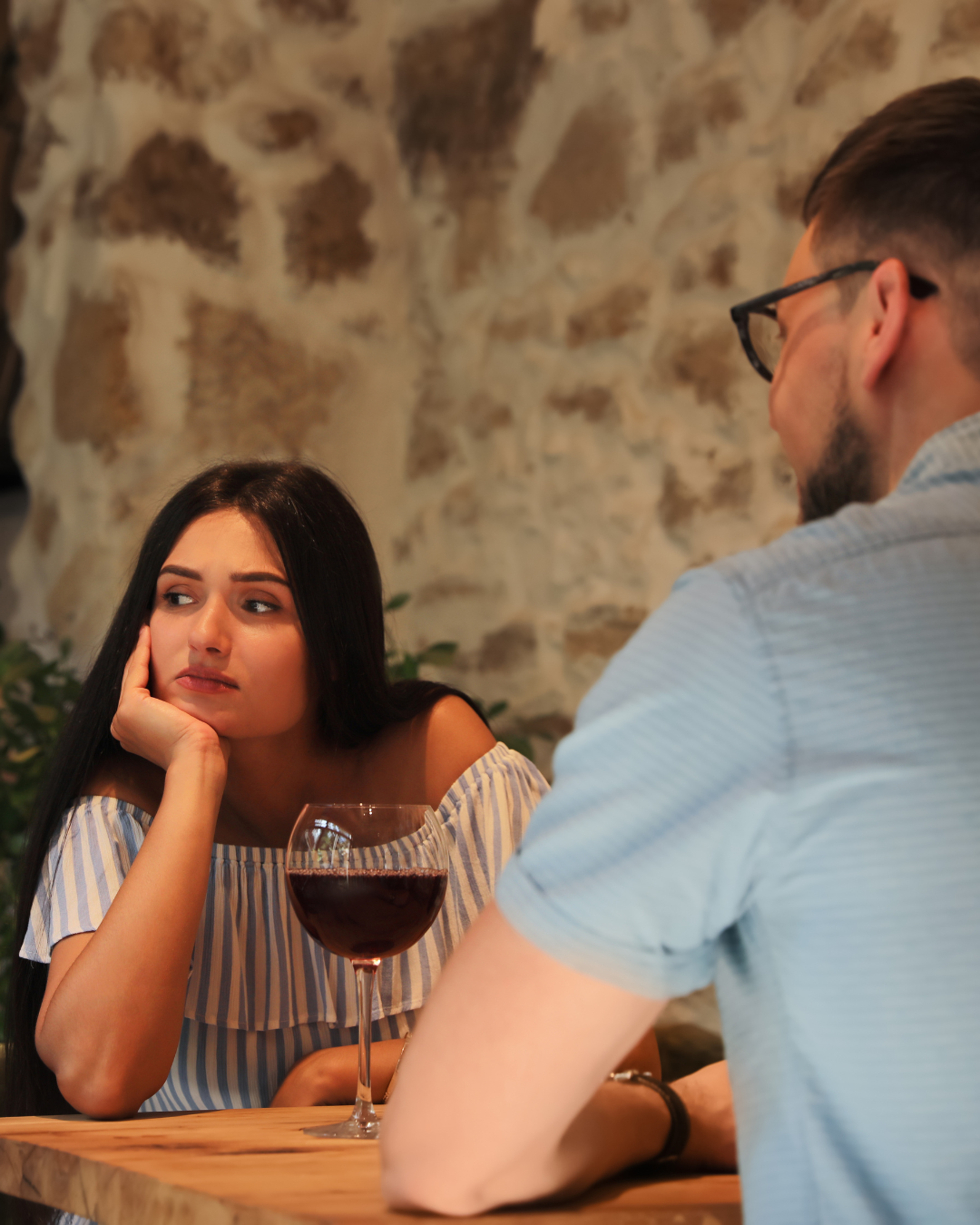
Woman unhappy scrolling on a dating app.

The Apps Are Losing Paying Customers

Match Group owns Tinder, Hinge, Match, OkCupid, and Plenty of Fish. As a result, its earnings reports work as a rough proxy for the whole category.

In the second quarter of 2026, Match Group reported revenue of $853 million, which fell 1% year over year. More telling, total paying users dropped 6% to 13.3 million. Tinder alone lost 5% of its payers, landing at 8.5 million.

Meanwhile, revenue per payer climbed 6% to $21.13. In plain terms, the apps are charging more money to fewer people.

That pattern matters. Tinder’s monthly active users have now declined for more than three years, and management does not expect payers to return to growth until late 2027. Furthermore, Tinder’s registrations grew just 1% in March, the first increase since 2024.

Hinge remains the exception, with revenue up 22% and monthly active users up 13%. Still, one growing brand does not offset a shrinking base across the rest of the portfolio.

Burnout Is Nearly Universal

The financial numbers reflect something users have been saying for years.

A Forbes Health survey of 1,000 American dating app users found that 78% feel emotionally, mentally, or physically exhausted by the apps at least sometimes. Notably, women reported higher burnout than men, at 80% compared with 74%.

Pew Research adds a sharper detail. Among people who used dating apps within the past year, roughly 88% of men and 90% of women said they often or sometimes felt disappointed by the people they encountered.

Nearly everyone on these platforms feels let down by them. Because of that, the exhaustion is not a personal problem. It is the default experience.

A happy couple that met through matchmaking.

Meanwhile, Matchmaking Keeps Growing

Now compare that to the other side of the industry.

The U.S. matchmaking service market was valued at roughly $3.0 billion in 2025 and is projected to reach $5.2 billion by 2033, at a compound annual growth rate near 7.4%. Across North America, the market sits at approximately $4.5 billion and is forecast to hit $7.8 billion over the same period.

Industry analysts also report growth near 9.5% specifically in premium matchmaking services, the segment serving high-net-worth and high-achieving clients.

So one model is shrinking its user base while raising prices. The other is expanding.

Why the Shift Is Happening

The apps solved the meeting problem. Consequently, that problem no longer needs solving.

What they never addressed is everything after the introduction. Nobody interprets the mixed signal you got on Tuesday. No one tells you why three connections in a row went quiet at the same point. Above all, no one gives you honest feedback, because the person who lost interest simply stops replying.

Volume was the entire value proposition. However, volume turned out to be the problem rather than the solution.

Pew found that only about one in ten partnered adults met their current partner through a dating site or app. Billions of swipes have produced a fairly modest hit rate.

What Matchmaking Adds

A professional matchmaker changes three variables that apps leave untouched.

Screening happens before you invest time. Someone verifies identity, intent, and readiness in advance. Therefore you spend your evenings on qualified people instead of on discovery.

Feedback replaces guessing. After each date, you learn what actually happened rather than inventing an explanation for silence.

Support continues past the introduction. This is the piece most of the industry still misses. Traditional matchmaking makes a connection and steps back, which leaves both people alone during the most fragile stage of a new relationship.

That last point is why we built our proprietary 3-Date Model. First dates measure nerves, while second and third dates measure compatibility. When someone guides clients through that window, premature endings drop sharply.

We call the broader approach relationship curation, and TIME recently covered it.

What This Means for You

The data does not say dating apps are useless. Millions of people still meet on them every year.

Instead, the data says something more precise. If you are over forty, serious about a long-term relationship, and short on time, then the app model is working against your specific goals. You are optimizing for volume in a situation that rewards depth.

The comeback is real because the alternative stopped working for a large group of people. Matchmaking is not nostalgia. Rather, it is a different structure for a different objective.

Where to Start

We work with commitment-minded singles nationwide who are finished with apps and ready to date with structure and support.

Apply for matchmaking: Two Ways to Work With Us

Not ready to become a client? Add your profile to the Singles Rolodex at no cost. That is how we source matches for our clients.

See the outcomes: Our Success

Are Dating Apps Dead? What Singles Are Doing Instead.

If you’ve felt the swipe fatigue setting in, you’re not imagining it. The numbers back you up. Match Group, the parent company behind Tinder, Hinge, and a dozen other apps, just posted Tinder’s first-ever annual revenue decline. Bumble’s paying subscribers dropped 16% year over year. Match rates for men on Tinder have fallen to a brutal 0.6%. So the question singles keep asking — are dating apps dead — isn’t just a hot take. It’s backed by the data.

They’re not gone. But the era where an app was your default answer to “how do I meet someone” is closing fast. Here’s what’s actually happening, and where singles are putting their time and money instead

The Numbers Behind the Question “Are Dating Apps Dead?”

A few data points explain why so many singles are asking are dating apps dead and answering with their thumbs:

Tinder’s revenue declined for the first time in company history in 2025, even as the company raised prices.

Bumble’s paying users fell 16% year over year, and Match Group as a whole lost 5% of its paying base.

Men match on roughly 0.6% of swipes. Women fare better at around 10%, but neither number reflects an app that’s working as advertised.

About 78% of users report burnout, according to a Forbes Health survey, and average session length is shrinking even as people open the apps more often out of habit than hope.

Only around 12% of online daters end up in a committed relationship or marriage from a dating app match, per Pew Research.

Professional matchmaking, by contrast, reports success rates between 60% and 80%.

That last gap is the one that matters most. Apps are a numbers game with bad odds. Matchmaking is a curation game with good ones.

A person looking at phone bored.

Why the Apps Are Losing Singles

It’s not one scandal or one bad update. It’s structural, and singles have caught on.

The incentives are backwards. A dating app makes money when you keep swiping, not when you find someone and delete the app. Every successful match is a lost subscriber.

The math doesn’t work for most users. With men matching at 0.6%, the average single is investing hours for a result that rarely produces a real date, let alone a relationship.

The time cost is enormous. Dating app users spend close to an hour a day on these platforms — roughly 300+ hours a year — for a conversion rate that wouldn’t survive in almost any other industry.

Safety and trust issues are mounting. Pew Research found that 48% of online daters have experienced unwanted behavior on a platform, and romance scam losses topped $1.1 billion in a single year.

It trains bad habits. Swiping rewards split-second judgment on a photo. It doesn’t build the conversational or social skills that actually carry a relationship past date one.

What Singles Are Doing Instead

Curated introductions through real people. Whether that’s a friend’s setup or a professional matchmaker, vetting by a human who knows both people removes the guesswork an algorithm can’t replicate.

Professional matchmaking services. This is the direct alternative to the algorithm, and it’s the one with the dramatically better success rate — 60 to 80 percent, compared to roughly 12 percent for apps.

In-person communities and events. Classes, clubs, and interest-based meetups let people self-select into a shared context before any romantic pressure enters the picture.

Trusted networks and membership communities. Singles are looking for ways to expand who they know and who knows them, without it being a transactional swipe.

Treating apps as a supplement, not a strategy. Some singles aren’t deleting apps entirely, but they’re no longer treating them as the plan. They’re one small input alongside real-world effort.

A happy couple.

The Smarter Way to Date in 2026

Singles aren’t asking whether dating apps are dead because they’ve given up on dating. They’re asking because they’re looking for what comes next.

If you’re tired of swiping with nothing to show for it, it might be time to try a different approach. Join our Singles Rolodex — a free, no-cost profile that puts you in front of our matchmakers as we curate dates for our paying clients. No swiping, no algorithm, just a real chance to be considered for a meaningful introduction.

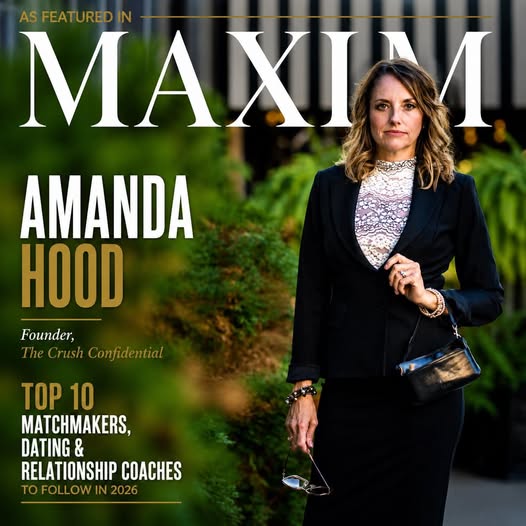
Amanda Hood Named One of Maxim’s Top 10 Matchmakers & Relationship Coaches to Follow in 2026

Amanda Hood Featured in Maxim

The dating world is changing rapidly.

Between dating app fatigue, ghosting culture, AI-generated conversations, and a growing desire for genuine human connection, more singles are turning toward something far more intentional: professional matchmaking.

That’s why we’re incredibly honored that Amanda Hood, founder of The Crush Confidential, was recently recognized in Maxim as one of the Top Matchmakers & Relationship Coaches To Follow in 2026.

The feature highlighted leading relationship experts across the country who are redefining what modern dating looks like — especially for busy professionals, executives, and relationship-minded singles who are no longer interested in wasting time on surface-level connections.

And for us, this recognition represents something much bigger than press.

It reflects a shift happening across the entire dating industry.


Matchmaking Is No Longer a Luxury Reserved for Celebrities

For years, matchmaking was viewed as something reserved for ultra-high-net-worth individuals or public figures.

Today, that perception is changing.

More successful singles are realizing that while they’ve mastered their careers, businesses, and personal growth, dating has become increasingly difficult to navigate alone.

Not because they aren’t attractive or accomplished.

But because modern dating has become noisy.

Too many options.
Too little clarity.
Very little intentionality.

That’s where professional matchmaking changes everything.


Why More Singles Are Turning Away From Dating Apps

The reality is simple: many people are exhausted.

They’re tired of:

  • Endless swiping

  • Inconsistent communication

  • Situationships

  • Conversations that never lead anywhere

  • Trying to build meaningful relationships in environments designed for volume instead of compatibility

At The Crush Confidential, we’ve seen a growing number of clients seeking something entirely different.

Not more matches.

Better ones.


What Makes The Crush Confidential Different

One of the things highlighted in the feature was Amanda Hood’s unique approach to matchmaking — particularly her proprietary three-date model.

Because introductions alone are rarely enough.

Many relationships that could have succeeded fall apart in the earliest stages due to:

  • Miscommunication

  • Anxiety

  • Premature assumptions

  • Lack of guidance

Instead of simply making introductions and disappearing, Amanda actively supports clients through the earliest phase of connection — where most modern relationships either build momentum or quietly dissolve.

This creates something most people rarely experience in dating today:

Clarity.


Matchmaking Is About More Than Finding Someone

At its core, high-level matchmaking isn’t just about access to eligible people.

It’s about transformation.

Over the years, Amanda has worked with successful, relationship-minded singles who often discover that the biggest shift isn’t simply meeting the right person.

It’s learning:

  • How to communicate more effectively

  • How to recognize healthy connection sooner

  • How to stop repeating old patterns

  • How to date intentionally instead of reactively

The right relationship starts long before the relationship itself.


The Return of Human Connection

One of the most powerful themes emerging in dating right now is the desire for real connection again.

Not curated personas.
Not perfectly crafted text messages.
Not endless options.

Real people.
Real compatibility.
Real partnership.

And that’s exactly why matchmaking continues to grow.

Because while technology may continue evolving, the desire for meaningful connection remains deeply human.


Why This Recognition Matters

Being recognized alongside some of the country’s leading matchmakers and relationship experts is an incredible honor for Amanda and The Crush Confidential.

But more importantly, it reinforces the mission the company has always had from the beginning:

To create intentional, lasting relationships in a dating culture that often prioritizes convenience over connection.

At The Crush Confidential, the goal was never simply more dates.

It was always helping clients build one relationship that truly fits the life they’ve created.

And in today’s dating landscape, that matters more than ever.

Dating Feels Different Lately — Here’s Why

A woman reading

Something has quietly shifted in the dating world.

It’s not loud. It’s not obvious at first. But if you’ve been single in the last year, you’ve likely felt it.

People aren’t dating the way they used to.

They’re more cautious.
More selective.
More aware of what they’re signing up for.

And in many cases… they’re choosing not to engage at all.

At The Crush Confidential, we’re seeing a clear pattern: singles aren’t giving up on love — they’re stepping back from how they’ve been told to find it.


Dating Has Become Less About Chemistry — and More About Evaluation

There was a time when dating started with curiosity.

Now, it often starts with quiet assessment.

Before a first date even happens, people are already asking themselves:
Does this person fit into my life?

Not just:
Do I like them?

Lifestyle. Career. Communication style. Emotional availability.

Modern dating has become less spontaneous and more strategic.

Not because people are cold — but because they’ve learned that attraction alone isn’t enough.

More People Are Opting Out Than You Think

One of the most noticeable shifts right now is how many people are stepping away from dating altogether — at least temporarily.

They’re not swiping as much.
They’re not entertaining every option.
They’re not forcing connections that don’t feel aligned.

Instead, they’re:

  • Focusing on their routines

  • Investing in friendships

  • Building full lives outside of relationships

  • Becoming more selective about who they let in

It’s not avoidance.

It’s discernment.

The Rise of “Quiet Vetting

Another subtle but powerful shift?

People are doing their homework — quietly.

Before meeting, many already know:

  • What someone does professionally

  • How they spend their time

  • What kind of life they’ve built

  • Who they surround themselves with

This isn’t about being overly critical.

It’s about reducing uncertainty in a dating culture that has historically been full of it.

After years of mixed signals and unclear intentions, people are looking for evidence of alignment early.

Communication Has Never Been Easier — or Less Clear

On paper, communication today should be effortless.

We can text instantly.
Send voice notes.
Stay connected all day.

And yet, many people feel more confused than ever.

Why?

Because communication has become curated.

Thought-out messages. Perfectly timed responses. Carefully constructed wording.

But when everything is polished, it becomes harder to read what’s real.

And clarity — the one thing people are craving — gets lost.

Dating Is Becoming More Intentional… and More Guarded

Modern singles are protecting something they didn’t guard as carefully before:

Their energy.

You see it in small ways:

  • Shorter first dates

  • Lower tolerance for inconsistency

  • Faster decisions about whether to continue seeing someone

  • Clearer boundaries around time and effort

It can feel transactional on the surface.

But underneath it is something much deeper:

Self-respect.

What This Means for Relationships Moving Forward

This shift isn’t signaling the end of dating.

It’s signaling the end of mindless dating.

People are no longer willing to:

  • Enter unclear situations

  • Invest in inconsistent behavior

  • Stay in connections that don’t progress

They’re choosing clarity over chaos.

And while that narrows the pool, it strengthens the outcome.

A woman walking confidently.

A Matchmaker’s Perspective

From where we sit at The Crush Confidential, this isn’t a crisis.

It’s a correction.

The people who are thriving in today’s dating environment aren’t the most charming or the most available.

They’re the most clear.

They communicate directly.
They follow through.
They know what they want — and they’re not afraid to express it.

And because of that, they stand out immediately.


The Bottom Line

If dating feels different right now, it’s because it is.

People aren’t less interested in love.

They’re just no longer interested in wasting time finding it.

So they’re slowing down.
Paying attention.
Opting out of what doesn’t work.

And becoming far more intentional about what does.

Because the goal was never more options.

It was always the right one.

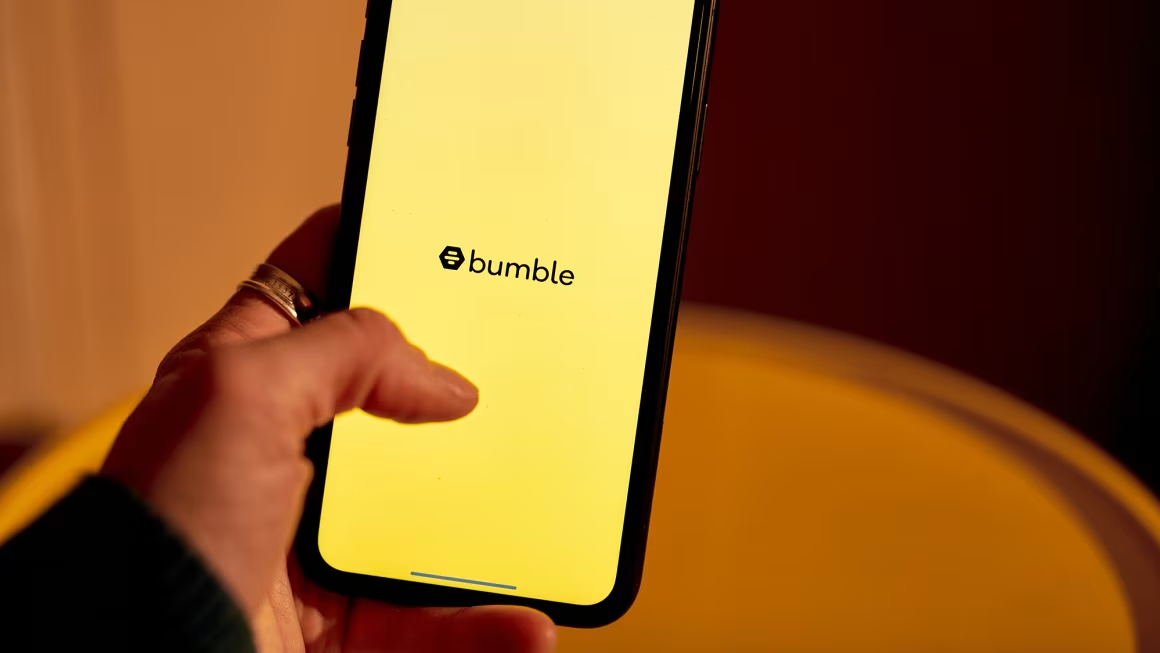
Trouble in the Hive: What Bumble’s Layoffs Say About the Future of Online Dating

If you’ve ever found yourself burned out by swiping or wondering why modern dating feels more like a job than a joyride, you’re not alone—and it seems the dating app world is feeling the strain too.

This week, Bumble announced it’s laying off 30% of its workforce—about 240 employees—in a move to cut costs and “realign its operating structure.” That’s a big shake-up for a company that once made headlines as the feminist-forward app where women make the first move. But what’s even more telling is why it’s happening: Gen Z and millennial users are becoming disillusioned with dating apps altogether.

Bumble has lost 90% of its stock value since going public in 2021. Its user growth and revenue are declining, and even premium subscriptions—once a reliable income stream—are slipping. Founder Whitney Wolfe Herd has rejoined the company after stepping away for two years, admitting in a candid interview, “Bumble needs me back.”

The company says it will reinvest the money saved from layoffs into AI-powered tools and new product features, hoping to regain trust and engagement from its audience. But the question remains—can technology alone fix what’s broken in dating?

At The Crush Confidential, we’ve long believed the issue goes deeper than just interface fatigue or flashy features. People are craving genuine connection—not algorithms. Our clients are often professionals who’ve tried apps and felt more disappointed than hopeful. They’re looking for something real—and let’s be honest, that’s hard to find when your love life is outsourced to a swipe.

Interestingly, while Bumble and Match Group (Tinder, Hinge) are restructuring and scaling back, Grindr—an LGBTQ+ dating app—has seen major success lately. Its stock is up over 115% in the last year, largely because it’s leaning into intentional dating and improving its user experience.

So what does this all mean for modern love? We’re at a turning point. The convenience of dating apps once felt revolutionary, but many are now realizing that curated matches, human connection, and personalized support are the future.

If you’re ready to get off the app hamster wheel and start dating with intention, you know where to find us 💌

Original article from CNN:
👉https://www.cnn.com/2025/06/25/tech/bumble-dating-app-layoffs